Freya Patterson · 5 September 2026
The Role of Steamboats in Connecting Isolated Settlements Along Lake of the Woods in the 19th Century
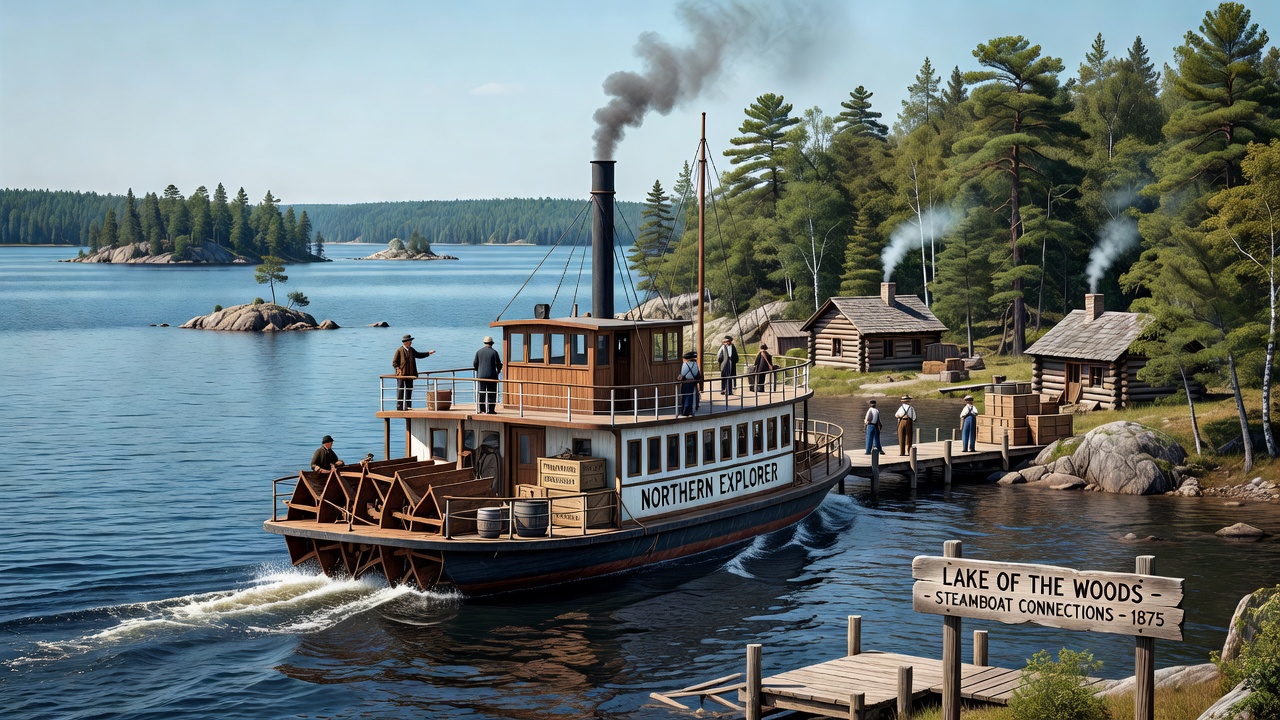
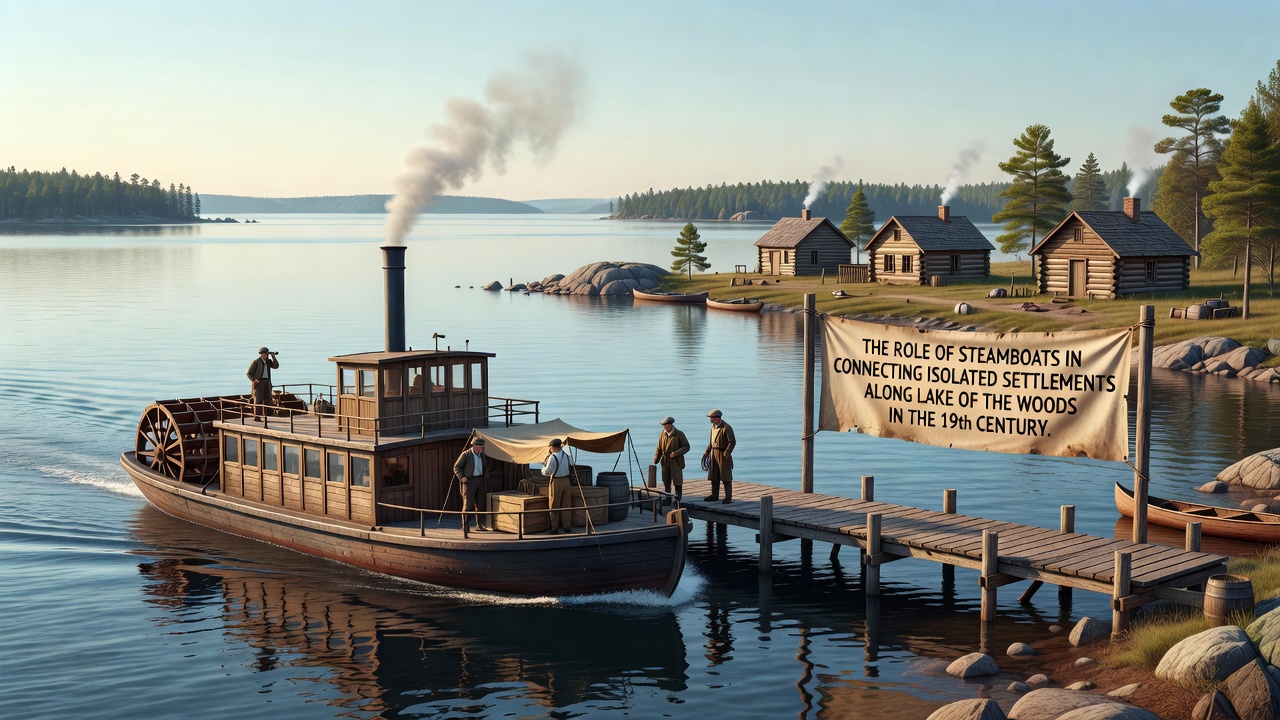
Steamboats emerged as essential transport links for scattered communities around Lake of the Woods throughout the 1800s, since the vast waterway stretches across parts of present-day Ontario, Manitoba, and Minnesota while overland routes remained limited or nonexistent in many areas. Early vessels carried passengers, mail, and supplies between fur trading posts and growing lumber camps, and records from the period show how these boats reduced travel times from weeks by canoe to days by steam power. Operators adapted designs from Mississippi River craft to handle the lake's rocky shores and variable depths, which allowed reliable service even when ice cleared each spring.
Expansion of Routes and Key Settlements
By the 1850s steamboat lines extended from Rat Portage, now known as Kenora, to outposts such as Fort Frances and Warroad, while smaller landings at Sioux Narrows and Angle Inlet received regular calls that supported both commercial fishing and settler families. Historical accounts indicate that companies like the Lake of the Woods Steamship Line scheduled runs that synchronized with railheads at nearby stations, which in turn fed goods into broader markets in Winnipeg and Duluth. Those who maintained the vessels often repaired hulls at local boatyards using timber harvested nearby, and this cycle kept operations running without heavy dependence on distant suppliers.
Trade, Communication, and Community Ties
Steamboats transported furs, fish, and timber products outbound while returning with flour, tools, and news from larger centers, and data from customs logs reveal steady increases in cargo volume after 1870 as population centers expanded. Mail contracts awarded to steam operators ensured letters and newspapers reached isolated households within reasonable intervals, whereas previous reliance on dog sled or paddle craft had created longer gaps. Observers note that seasonal festivals and supply fairs often aligned with boat arrivals, which fostered social connections among residents who otherwise met infrequently. One documented case from the 1880s shows how a single vessel delivered medical supplies during a winter delay, preventing shortages in several northern hamlets.
Operational Challenges and Technological Shifts
Captains navigated shifting sandbars and sudden storms that could strand boats for days, yet crews developed local knowledge of safe passages through channels such as the Devil's Gap and Western Peninsula. Fuel needs required stops at woodlots along the shore, and this practice supported small-scale logging operations that employed seasonal workers from nearby settlements. Toward the end of the century, competition from new rail lines and improved roads began to erode steamboat dominance, although some vessels continued limited service into the early 1900s for tourists and specialized freight. Figures from Canadian and American port records indicate peak activity around 1890 before gradual decline set in.
Conclusion
Steamboats shaped settlement patterns and economic activity across Lake of the Woods during the 19th century by providing the primary means of long-distance movement in a region where geography posed persistent barriers. Their operations connected remote populations to wider networks of trade and information until alternative infrastructure took hold, and surviving manifests plus company ledgers continue to document the scale of that contribution for researchers today. According to resources from Library and Archives Canada, these vessels formed an integral chapter in the transportation history of the borderlands.